With outdoor blinds, the fabric you choose is as important as the system it hangs on. The fabric determines how well your blind controls heat and glare, holds shape, and performs over the years.
This is one of the reasons why fibreglass fabric is a popular material choice for demanding outdoor environments. Fibreglass-based fabrics are used in outdoor blind and solar-screen systems for their strength, resilience and dimensional stability.
It is also worth noting that fibreglass is not new or unique, it is a long-established material used by major manufacturers worldwide.
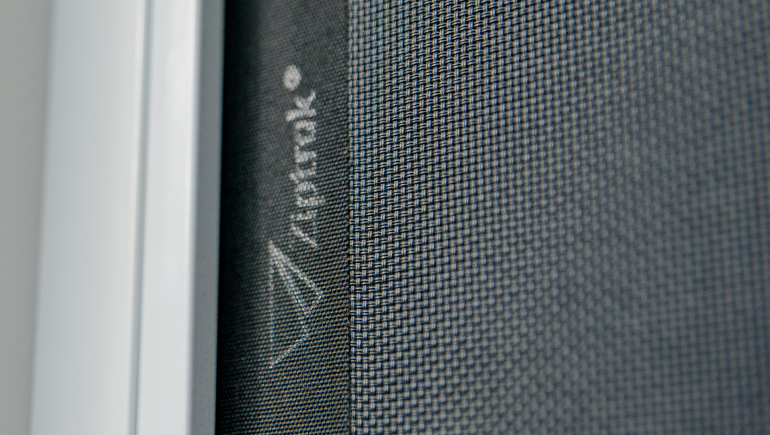
What Is Fibreglass Outdoor Blind Fabric?
Fibreglass outdoor blind fabric is made by weaving ultra-fine glass fibre yarns into a textile. This is typically coated with PVC to create a smooth, weather-resistant surface.
The premium glass fibre yarn is what sets it apart. This is an inorganic material with inherently high tensile strength, making it highly resistant to being pulled apart. This gives the finished fabric structural integrity that generally outpaces polyester-based alternatives.
Different outdoor fabrics have different levels of stretch and dimensional stability, depending on their construction and composition. Fibreglass yarn has very low elasticity, which can help fabrics maintain their shape under tension. This is one reason fibreglass-based fabrics are widely used in outdoor shading and solar-screen applications.
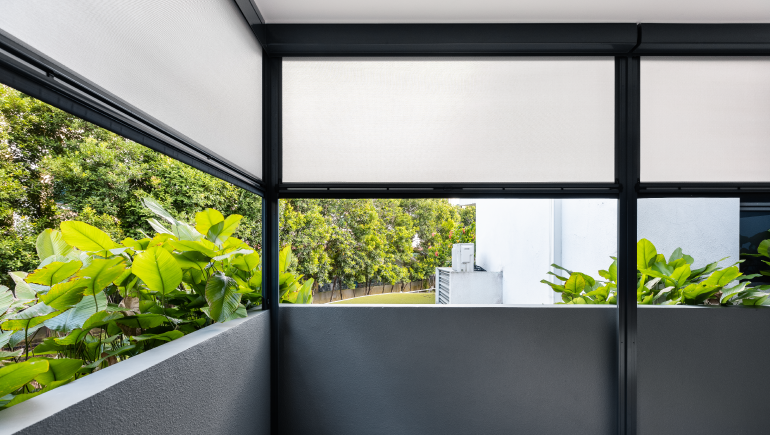
Why Is Fibreglass Well-Suited to Outdoor Blinds?
1. Resistance to Stretching and Elongation
Elongation is the gradual stretching of a fabric under repeated tension, and it is one of the most common causes of outdoor blinds losing their neat appearance. Fibreglass yarn resists it well thanks to the yarn’s very low elasticity.
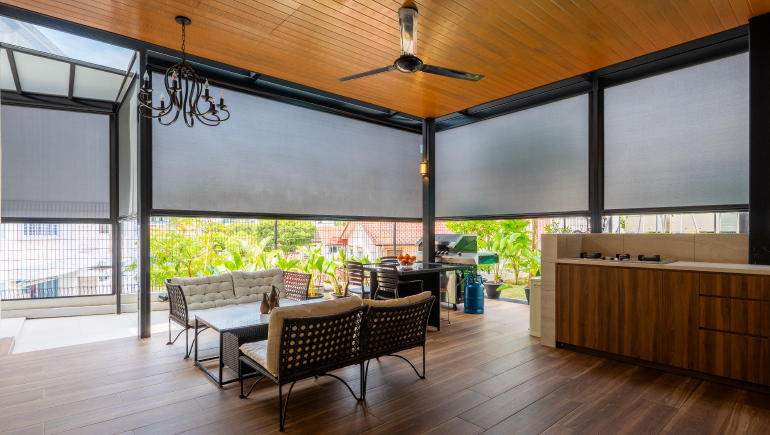
This property is particularly vital for larger outdoor blinds. Those installations carry more weight and place greater strain on the fabric across their full width.
2. Dimensional Stability
Dimensional stability refers to a fabric’s ability to keep its original size and shape despite factors like humidity changes and repeated use. Fibreglass fabrics are known for their dimensional stability, helping them maintain their shape under tension and changing outdoor conditions.
This enables blinds using these fabrics to keep a consistent and polished appearance throughout their lifespan. This is an important consideration for homeowners who want their outdoor blinds looking neat for years to come.
3. Durability Under Prolonged Sun Exposure
Outdoor fabrics face some of the most unforgiving environments in Singapore. They have to endure direct and intense sunlight for hours each day, due to the island’s tropical climate.
Fibreglass itself is an inorganic material and is inherently resistant to degradation from outdoor exposure. In a finished outdoor blind fabric, however, performance also depends on the PVC or vinyl coating, fabric construction and overall product formulation. This makes UV and weather resistance an important consideration for exposed installations, particularly west-facing balconies that receive strong afternoon sun.
4. Resistance to Heat and Outdoor Conditions
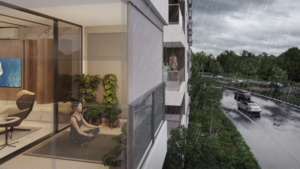
Singapore’s climate combines high temperatures constantly in the 30s (Celsius) and high humidity. You also get sudden showers and rough winds from monsoons.
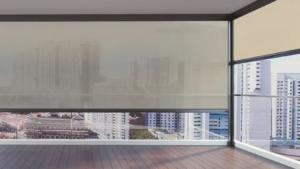
Fibreglass-based solar-screen fabrics can help manage solar heat and glare, depending on their weave, openness factor, colour and coating.
For example, some fibreglass screen fabrics are specifically designed to reduce solar heat gain while maintaining outward visibility and airflow. This makes the fabric’s solar-control properties an important consideration for exposed outdoor spaces.
5. Clearer Outward Views
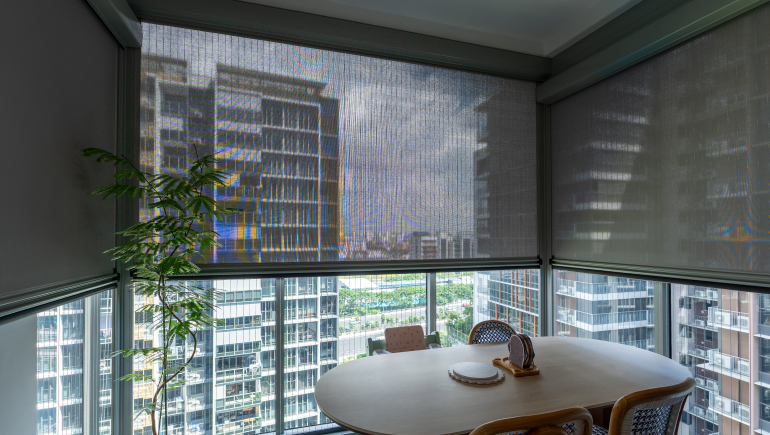
Fibreglass fabrics can also provide clearer outward views thanks to the finer glass fibre yarns used in their construction. These finer yarns allow for more holes per square inch within the fabric while maintaining a strong, stable structure.
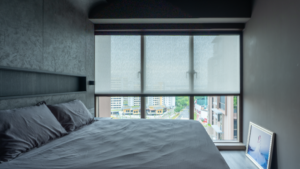
The result is a finer, more consistent mesh that provides a crisper view through the blind. This is particularly useful for balconies and outdoor spaces where homeowners want to reduce glare and heat without losing their scenic views.
Why Fibreglass Fabric Is Considered Premium
When fibreglass is described as a premium fabric, this is due to the combination of its material properties instead of just price alone.
- High tensile strength: Resists tearing and deformation under load.
- Resistance to stretching: Holds shape under consistent daily tension.
- Good dimensional stability: Maintains original size across temperature and humidity changes.
- Suitable for larger blind installations: Fibreglass-based fabrics can offer good dimensional stability and strength for larger applications, subject to the specific fabric and system specifications.
- Helps maintain a neat appearance over time: Less prone to sagging or warping.
Together, these properties mean fibreglass performs reliably in demanding outdoor environments over the long term. That combination of long-term suitability and material performance is what the “premium” designation truly refers to.
Fibreglass Fabric Is an Established Material in Premium Outdoor Shading
Fibreglass is a long-established material used by recognised manufacturers across the shading industry. Brands including Ziptrak®, Phifer and Hunter Douglas offer outdoor or solar-screen fabrics incorporating fibreglass.
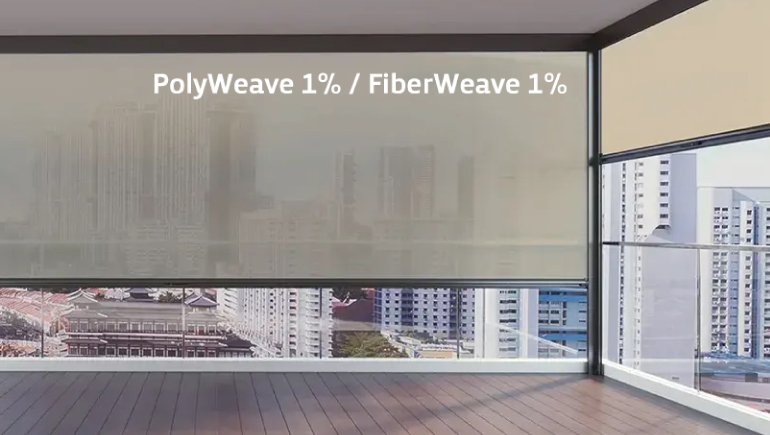
Ziptrak® in particular offers FiberWeave 1%, a Singapore-exclusive fibreglass-based outdoor fabric designed to provide better resistance to elongation over time.
The range of benefits described earlier is precisely why the material has become a widely validated choice across the industry rather than an innovation tied to a single brand.
Is Fibreglass Fabric Right for Your Outdoor Space?
Here are the key factors that make fibreglass a strong option for your home:
- Long-term durability
Ideal if you want a blind that holds its form over many years without early replacement. - Resistance to elongation
Especially important for larger blinds or those exposed to sustained afternoon sun. - Heat and glare reduction
Depending on the fabric’s openness, colour and construction, fibreglass mesh fabrics can provide solar control while maintaining airflow and natural light. - Maintaining natural light and views
Fibreglass solar-screen fabrics are available in different openness levels, allowing homeowners to balance privacy, glare control, natural light and outward visibility. - Performance in exposed outdoor environments
Recommended for high-rise balconies, west-facing units, or spaces with minimal overhead cover.
Fabric selection should also factor in the blind system you choose, your balcony’s orientation, and how you plan to use the space. These are all things an experienced retailer can help you think through with fabric samples in hand.
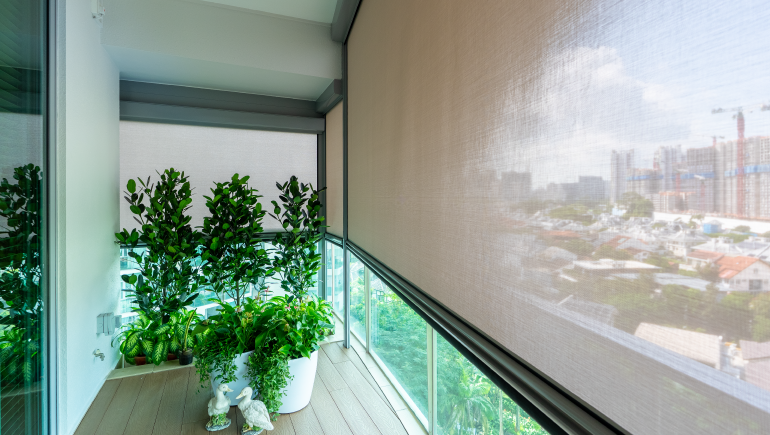
A Strong Contender for Demanding Outdoor Spaces
Fibreglass is a well-established premium fabric material that is valued for its strength, dimensional stability, and long-term durability in exposed outdoor environments.
Homeowners considering fibreglass outdoor blinds may find them particularly suitable for exposed spaces where strength, dimensional stability and resistance to elongation are important considerations.
Speak with an authorised Ziptrak® retailer to learn more or even view samples in their showrooms to find the right fit for your home.